

In Conversation with Women Speakers
Although relatively few women have held the position of Speaker in Canada’s parliamentary assemblies, six women currently preside over 15 chambers across the country. In this roundtable, the Canadian Parliamentary Review editorial intern Geneva Fuina spoke with four women Speakers about why they sought out this position, what has surprised them about their role, and what changes they’ve implemented.
Participants: Hon. Danielle Barkhouse, Hon. Raymonde Gagné, Nathalie Roy, Hon. Donna Skelly
Danielle Barkhouse is Speaker of the Legislative Assembly of Nova Scotia, Raymonde Gagné is Speaker of the Senate, Nathalie Roy is President of the Assemblée nationale du Québec and Donna Skelly is Speaker of the Legislative Assembly of Ontario.
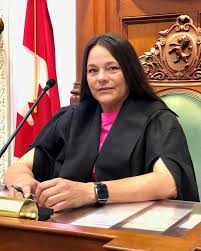
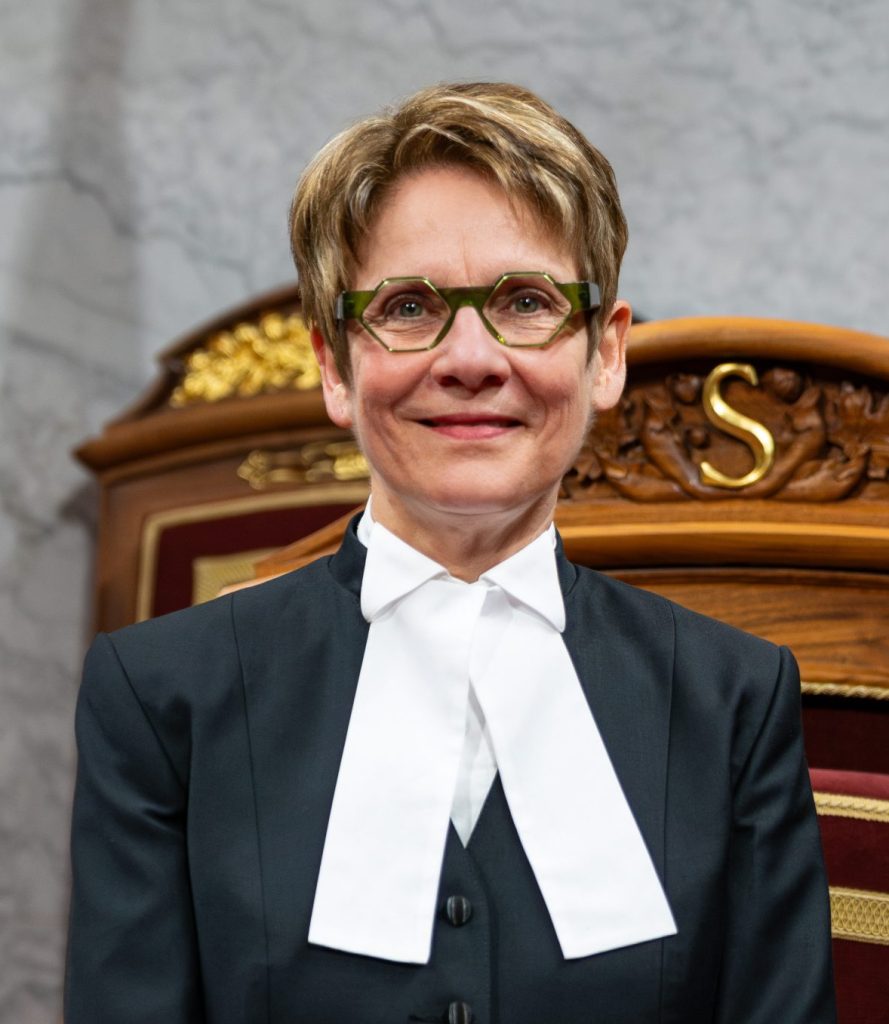
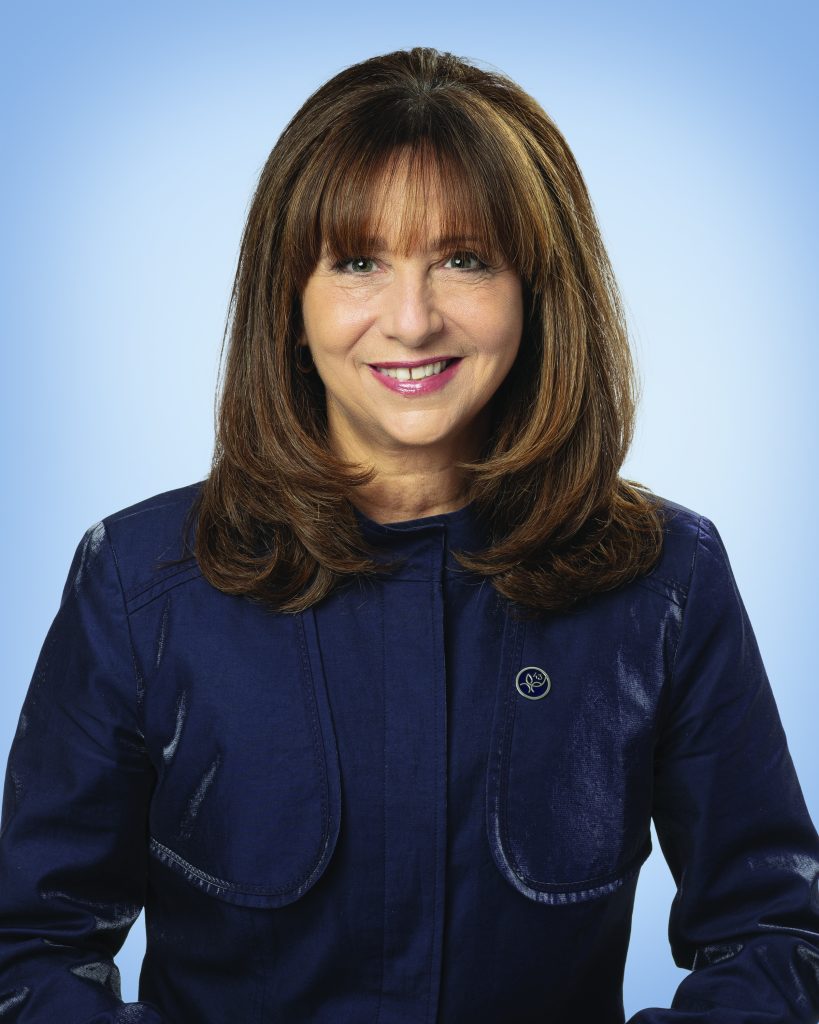
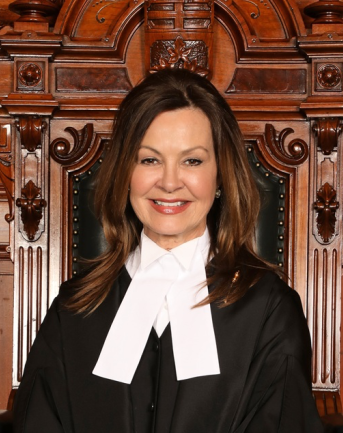
CPR: Speakers, thank you so much for taking the time to meet with me today. I have a few questions that can guide us in our discussion, but of course, if other topics come up naturally, organically, that’s what we aim for.
The role of the speaker, historically, has been dominated by men. All of you are either the first, second, or third woman to hold your role in your respective legislature. What does being a woman speaker mean to you?
Donna Skelly: Natalie, you have been Speaker longest, correct. You should go first.
Nathalie Roy: I’ve been in this position for several years. It is our colleagues, the members of the Legislature, who elect us, and it is a great privilege. It is an honour.
We must earn and keep the trust of all the elected officials of all parties. I am only the second woman President in 230 years of the Quebec Legislature, so I take this role extremely seriously.
Being in this position means becoming a role model for women. It tells women it’s possible. If you want to go into politics, yes, it’s possible. And, you can reach the highest offices; you can preside over an assembly. In Quebec and Canada, with my other colleagues, we have this opportunity to become an example for those women who want to take the plunge into politics.
DS: I’m the first woman Speaker in Ontario. As proud as I am of that, and I really genuinely am, I want to be remembered as not just the first female, but probably the best Speaker. I think that’s one of the things that women forget. We want to be at the table, but I think it’s time that we also be recognized for our level of professionalism and our abilities, not just our gender.
I’ve been there for eight months now, and I’m hoping the changes that I’ve already brought forward will help define me as one of the best speakers in Ontario history. Because, as I said, women not only deserve a seat at the table, we should also be leading the discussion because many of us are the best in the room.
Danielle Barkhouse: I agree with my colleagues 100 per cent.
I usually don’t take on this type of role, but I have to give shout-outs because, as the second woman Speaker of Nova Scotia’s Assembly, and as a single mother, I think for me, it is very important to show my daughter and other young ladies out there that you can do this. You can be anything that you want to be.
To go from a backbench or MLA to a Speaker is, to me, quite amazing. I feel fortunate. Like Donna, I want to be the best Speaker they’ve ever had in 255 years. Male, female, I don’t care. I’m not looking at what sex they are; I’m looking at what they’ve done as a Speaker.
Raymonde Gagné: I believe it’s a sign of progress. When I look back on my career, I realize that many of the leadership roles I have held, whether as a school principal, director, or president of a university, were positions I occupied as the first woman. As Speaker of the Senate, I am only the third woman to occupy the Speaker’s Chair of the Senate, the previous one having done so nearly 50 years ago.
To me, this reflects the evolution of our society. I think it serves as an inspiration to other women and girls, which is extremely important. It also highlights a different leadership style, which is essential to see in action, and helps break stereotypes. Diversity has real value: it fosters innovation, enriches knowledge, and sparks new ideas. For me, this is a sign of hope and meaningful change.
CPR: What drew you to the Speaker’s role? What influenced your decision to pursue it? Also, I’m wondering if you experienced any barriers to attaining the role as it relates to your gender, and if you felt welcomed once you were formally installed as the Speaker.
DB: I’ll go first. I’ve always been the motherly type. It comes from being in the healthcare profession. I mean, I’m never one to run from fires; I run toward them. So, for me, becoming Speaker fulfilled that inner part of me that wants to help. But, also, it appeals to the part of me that wants to be in control and to make sure that the House doesn’t go sideways… that decorum is kept. It really fulfilled a lot of my personality traits.
I was named Deputy Speaker in 2021 and studied that book. Every time I saw that Chair empty, I did whatever I could to get in there and sit as Speaker to show that I know what I’m doing, and that I can do this. There was already a Speaker. So, I suppose that was a barrier, but besides that, I didn’t find any barriers, and I felt welcome.
I take my job very seriously. If someone’s out of order, I’m calling them out of order. That’s part of the neutrality of this job. I don’t know what my colleagues will say, but when you spend all this time in caucus and running campaigns and being with people in your party, of course, you’re going to build this bond. But, when you’re in that Chair as Speaker, that bond has to be put to the side in order to be good at your job.
NR: I would say two things attracted me to the role of Speaker: my political experience over the last 10 years, and also my training. I’m a lawyer by training, and I would say I’m both a lawyer and a journalist by profession. The fact that I’m no longer in a confrontational role, but rather an arbitrator, a judge, complements my training as a lawyer—defending everyone’s rights and privileges.
Did I encounter any obstacles related to my gender in accessing this position? No, the vote was unanimous among my 124 fellow Members. I did feel welcomed in the position, but there was a challenge. I was told: Prove yourself and show us that you’re not a partisan.
I told you from the outset that my experience helped me prepare for these roles. I was fortunate enough to spend six years in the opposition. In the opposition, I was very, very, very partisan. That was my role. Then I had the great privilege of becoming a minister and serving for four years. As a minister, you don’t take a step back anymore; you take the heat. In the opposition, you attack. In the government, you get attacked, and you defend yourself. In the Presidency, you step out of the confrontation to become neutral, to become the arbiter. I strive, every day, to defend everyone’s rights and privileges. I think that my education and my experience have given me the skills to do the job well.
DS: I was privileged to serve as Deputy Speaker and, because of that opportunity, I recognized just how incredible this role was. So, I knew that I would want to run when the next session began.
In terms of any sort of barriers with being a woman, no, not at all. And I did feel welcomed, absolutely.
I always perceived the role of Speaker as being one that’s a very lonely role. But I think the Speaker can determine how social you want to be, and how accessible you want that position to be. As Speaker, I have a responsibility to bring people together, so it isn’t at all a lonely position. In fact, it’s very inviting, very welcoming. I make a concerted effort to reach out to people on all sides of the aisle to ensure that people get together and get along. When they do get to know each other, they’re far more productive at the Assembly.
RG: In the context of the Senate, the Speaker is appointed, not elected. In my case, the appointment followed a more or less formal consultation process. I was aware that my name had been mentioned among others, but I was nonetheless surprised that it was put forward for the Speakership.
It is often said that “in politics, timing is everything.” It’s important to understand that the vision of former Prime Minister Justin Trudeau was to make the Senate more representative of the diversity and needs of contemporary Canadian society.
As a result, during Mr. Trudeau’s tenure, the Senate surpassed gender parity, at one point reaching a representation of more than 55% women. In my case, I was in the right place at the right time.
What factor influenced my decision to accept the position? I must admit that I was a little hesitant, especially when it came to work-life balance. I knew it would mean having less freedom, more time away from my family, and so on. However, I also knew that accepting the role would allow me to promote women’s leadership, as well as the Francophonie, and that weighed heavily in my decision. If I had had to campaign to be elected, I probably wouldn’t have done it.
CPR: Many of the traditions and physical spaces associated with the Speaker’s role were designed long before any women held the role. Have you made any changes, either formally or informally, to any aspect of the Speaker’s role that reflects your lived experience as a woman? For example, have you made changes to the ceremonial dress, or the office or workspace that you’re provided?
RG: I made a few changes. On my first day, I made two decisions that I think can be attributed to the fact that I am a woman. The first was choosing not to wear the tricorn hat. Just like we no longer wear white wigs in Canada, I decided to move away from this inherited tradition.
The second decision concerned the tradition whereby the new Speaker pretends to resist being escorted to the Chair by the Leader of the Government and Leader of the Opposition. What this symbolizes, namely the risk of being imprisoned or even executed for displeasing the monarch, struck me as an archaic tradition.
On a less formal note, I also decided not to offer Scotch or whisky, or even a “Speaker’s spirits,” as is the tradition in the House of Commons. Finally, a senator kindly gifted me lace gloves, which I like very much, and which feel more delicate than the traditional pair. I am grateful to my honourable colleagues, who find different ways to show me their support.
DS: I started with the robe. It’s a very male garment. So, I’ve been working with the tailor. But he is not used to working with women – believe me – because we’ve gone back and forth just trying to fit a feminine body. Redesigning the robe and the pants, and creating a skirt. There’s a whole new mindset just coming up with that.
Like Raymonde, I did not the want tricorn hat as part of the ceremonial robe that they wear in Queen’s Park. I don’t like hats. I don’t wear one. The origin is very masculine, so instead, I’ve gone back to the gloves, and I have monogrammed white satin gloves.
And there have even been some changes to my office. When I arrived, my desk was the size of a small boat. It was just massive. I felt like I was just swallowed up in it. We’ve looked for more feminine pieces of furniture and brought that whole aspect to my office and to my attire.
I have also intentionally gone into our vault and started pulling pieces of artwork out and putting them back on the walls, reclaiming art that we had lost over the years. Our Group of Seven is back on the wall, and it’s beautifying the space, because I think a beautiful space is a must. People just really appreciate it, and it improves the whole work experience.
NR: I’m going to pick up on what Donna said. I completely agree. In Quebec, we don’t have a uniform to perform the duties of Speaker. We wear business attire, like a suit, but we don’t have a British-style uniform. We have a parliament more like the French one, but it’s a British-style arrangement, so it’s really a hybrid parliament. We don’t have suits. However, I agree with Donna.
Regarding the office, I insisted that we bring out all the antique pieces, the heritage furniture we had hidden here and there. I wanted to show it, because we are, after all, a young nation. Quebec, like Canada in general. The pieces of furniture now in my office belonged to the representatives of the Queen of England; these were the offices of the Lieutenant Governor before the 1970s.
But I said: “Let’s show these antiques; let’s show these pieces of furniture that are our shared heritage. These are our treasures.”
Furthermore, naturally, I added a feminine touch to the decor, to the choice of artworks that are on loan to us by the Musée national des beaux-arts du Québec. I had the privilege of serving as Minister for the Musée in another era.
That said, more specifically, what I did as President during ceremonies was to ensure that medals were awarded. We all have the power to present the President’s Medal. I wanted to ensure fair, and perhaps even slightly better, representation of women, because for too long women have been forgotten at award ceremonies for their community involvement.
So, I strive to highlight the presence of women, and women politicians. Furthermore, I have created a new medal for women who are making a difference in our daily lives in the community and who are often overlooked. I created a new award, named “Femmes engagées”, to recognize the women who are so important in our social fabric – who are truly making a difference in the community.
This is extremely important to me, especially raising their profile within Parliament, and that’s what I’m doing with a new award coming this spring as well.
DB: I love your award idea. I wrote that down. I love the glove idea as well. Similar to what my colleagues described, furniture was a big thing for me. My desk was taking up more than half the room.
Also, before we officially started this roundtable, we were talking about Christmas parties. I’ve been told by people who have been at the Assembly longer than I’ve been alive that this year we had the most exciting and elaborate Christmas decorations that they’ve ever seen at the Province House.
And, I probably shouldn’t say it, but it’s me, so I will say it because it’s a notable change. For the first time in 255 years, we have feminine hygiene dispensers in the Speaker’s washroom.
As gifts, Speaker’s Choice alcohol had almost always been a Scotch whiskey. I switched it up and went for blueberry vodka. I modernized that tradition.
I also have been focusing a lot on education during my time as Speaker, with mace tours and bringing in schools. We get students to do mock debates to learn about the work we do in the Assembly. They have an election for government and opposition, and premier and leader of the opposition, and they pick a topic to introduce as legislation. I give them a script, and then they get to run through the first, second, and third reading of the bill.
I’m also working with the tailor. I did change my gown up a little bit, but it still does not fit the curves of a woman. Therefore, I had to go back to the drawing board. You can probably see clips on YouTube where I’m constantly pulling it back up or readjusting it. It’s just not made for my body type.
DS: I wanted to mention, after my visit to Quebec, I borrowed a lot from what Nathalie has been doing in Quebec’s National Assembly, including a family room. For the first time ever, the Ontario Legislative Assembly has a family room. I remember the day she gave us a tour of their family room. I was standing there in awe, and bringing it to Queen’s Park has been an incredible success.
Danielle, you mentioned feminine hygiene products. We have now just introduced feminine hygiene products in all the washrooms for members, including in the lounges. And we’ve added mouthwash, combs, and hairspray… things that wouldn’t have been there before. It’s such a minor little addition, but it means a lot to people who are sitting in the Chamber.
CPR: In your opinion, does having more women in positions like the Speaker change the tone or priorities of the legislative debate?
DS: I’d say no. My background in journalism has had more of an influence on me in the Chair than my being a woman. I’m a strong woman. We all are strong women, and I think it’s our personality that has controlled the room, as opposed to our gender. My background in broadcast journalism means I’m a stickler for time and for clocks. Most people don’t know what it means to keep to time. If you’ve got a minute, you stick to a minute when you’re in broadcasting, not a minute and a half, not three minutes. The Members realized quickly that I was going to enforce the rules within our Standing Orders that dictate time.
I cut them off right to the second. I’ll stand up in the middle of an emotional debate, and they get cut right off. Now, they love it because they know exactly how long something’s going to last, and they just shave time off their speech. So, to me, my background in journalism was far more impactful than being a female.
NR: Donna, I was going to say exactly the same thing as you. The journalism background helps us; we have the same professional history in part, and you’re absolutely right.
It’s surprising that when we’re able to modulate our voice, which was part of our job, we’re also able, to a certain extent, control the intensity of the debates, to control the tone of the colleagues. That’s very, very subtle, depending on the context. I think I see Danielle nodding.
DB: I’m with both of my colleagues on this. I mean, you’re talking to three very strong women, but it’s not just about our gender. I believe more life experiences bring a better debate, better policies, and better legislation, better government for people.
I tell my children all the time that when you go to a museum and look at abstract art, you don’t want to be there with somebody who sees the same thing you see. If I see a boat, I want you to see a guitar, or, you know, flowers. We all have different life experiences, and have learned different life lessons, and have different perceptions. That’s good to have that at the table. So, for me, it’s not only gender; it’s all our life experiences.
RG: I would say the very composition of the Senate already makes a big difference, and adding a female voice to the Speakership has double the effect. In my interventions, especially when tempers rise in the Chamber, I strive to remain neutral and respectful, without reacting impulsively. Having that control helps prevent escalation and maintain a calm atmosphere.
One of my first decisions clearly illustrates my approach. When a senator raised a question of privilege regarding personal attacks and accusations circulated on social media, I ruled that this type of behaviour was unacceptable. My decision had an immediate effect. Since then, debates have become more cordial, illustrating the effectiveness of a collaborative leadership style aimed at changing the way things are done.
CPR: We’re now going to take a step back to when you ran for Speaker. Did you deliver a speech? If so, did you highlight your identity as a woman, and if not, why?
DB: No, I did not give a speech. And if I did, I would not have brought my sex into the speech. Nor would I ever want this position because I am a woman. I want this position because I am strong, because I know what I’m doing, because I can handle it, because I’m educated in how to do it. That’s why I want this position. I think the best qualified person for the job should always get the job, and in this case, I thought it was me.
CPR: I love that, thank you!
DS: Nathalie?
NR: I agree with you, Danielle. It’s not a question of gender; it’s a question of experience and competence.
However, during my speech, I specified that I was referring to my gender to remind all the elected officials and nine million Quebecers that I was only the second woman elected in 230 years. It’s important to remember this, especially since people in all the parties were calling for a female President. I wanted to remind them, but above all, to tell them that it was the people who were demanding it. Quebecers were demanding more women in positions of power.
Now, it is our duty as women in positions of power to ensure that the glass ceilings that have been broken stay shattered. The door that was opened, the door through which we passed, must remain open for other women. It’s our duty to remember that.
RG: Since I was appointed, not elected, I did not deliver a speech as part of my nomination. However, my identity as a woman and as a Francophone is reflected in most of my speeches, communications, and correspondence.
For example, when addressing my colleagues in French, I deliberately feminize titles, using the term « sénatrice » in the salutation « Honorables sénatrices et sénateurs », instead of grouping them all in the masculine « Honorables sénateurs ». My identity is central to my values, and I am committed to ensuring that it is fully and authentically expressed.
DS: I didn’t run on the fact that I was a woman. I was running against another woman, so regardless, one of us would be the first woman Speaker.
I came from Northern Ontario, grew up in small town Ontario, and was intimidated by big urban centres. If I felt that way, I’m sure I was not alone. I wanted part of my message to be bringing the Legislature to the people and bringing the people to the Legislature. That’s part of my vision of making it an inviting, welcoming destination for people from across the province.
But I want to expand on what Nathalie was saying. Now that we are there, there is a responsibility.
I’ve never believed in quotas. But, if you look at my office makeup, it’s all women. It’s not intentional; it’s who I feel comfortable with. And if I’m traveling, I’d much prefer traveling with a woman than a man, only because we’d probably have a lot more in common in where we want to go for dinner or such things.
Naturally, your circle becomes people you’re comfortable with. And I think it wasn’t always intentional that men excluded women. I think they probably had the same experience. They had more male friends. Therefore, they would surround themselves with people that they knew they could work with.
Now, we have to make sure that we go out of our way to really recognize and support women. We need to learn from what our male counterparts have done and start supporting each other, or continue supporting each other.
CPR: Some of you here today are also Francophone, and you hold a very unique position at the intersection of gender and linguistic identities. Moreover, both of these identities are underrepresented in the Canadian political landscape. How do you see your identity as a Francophone woman influencing the way you lead and navigate the Speaker’s role?
NR: Three of us come from Francophone backgrounds: Raymonde, in the Senate, comes from Manitoba, a province with a historically significant Francophone population. Francine, in New Brunswick, comes from an officially bilingual province. And me, in Quebec, which is a province where French is the official language.
Speaking French is extremely important to me; it’s part of my identity. When French people left France, came here and, with the First Nations who were already here, created New France, their French heritage helped to shape who we are.
I carry this heritage within me, and as President, it is my duty to make it shine. This is what makes us different, but it’s also what made us complementary when, with the British settlers, these three peoples founded Canada.
My heritage is very important to me. So, as a Francophone, it’s extremely important for me, in the only officially Francophone province in Canada, to express myself in French during my interviews with international officials. And naturally, if we can speak other languages, all the better.
It’s important to remember that Canada is different in this way.. Canada is a country with its own unique characteristics, and the federal government must take each of those characteristics into account. This applies to the Maritime provinces, Ontario, Quebec, the Prairies, and the Western provinces alike.
Each province is important. It has its own specific characteristics that we must respect.
RG: I have chosen to begin and end all of my correspondence and speeches, when bilingual, in French, which is not a traditional part of parliamentary culture. Both signage and how I preside over sittings also reflect this desire for fairness.
For example, I alternate languages when reciting the prayer at the start of each sitting, to ensure equitable representation. The objective is to give both official languages a meaningful place and to maintain a proper balance between them.
Whether in my role as a senator or as the Speaker, this commitment remains central. In 2023, I chose to vote at third reading in favour of Bill C-13, which sought to modernize the Official Languages Act. I was sponsoring this Bill in the Senate up until I was appointed Speaker. In the Senate, the Speaker has the option to vote, and, when choosing to exercise this right, they vote first. Contrarily, in the House of Commons, the Speaker is only called on to vote in the event of a tie. In the case of Bill C-13, I decided to do so because this was a very important issue to me.
In my role, Francophonie is a priority. I make a point of meeting with members of French-speaking minority communities and dedicating time to understand their concerns and perspectives. It is also at the forefront of my meetings with heads of missions and during international visits, in order to continue to grow the French language and its communities.
CPR: What has surprised you most about the Speaker’s role?
DB: There is a certain population that thinks that as soon as you become Speaker, you know everything; they think your brain has turned into Google. And I was quite surprised when I first won, on how many MLAs depend on the Speaker for that base knowledge of how things work. That surprised me immensely because it was not even first-termers coming to me for information.
What also surprised me was how you take on almost a motherly role to some MLAs. Not all of them, but certainly to some of them. Those two things surprised me the most, I would say.
DS: As I said earlier, I was expecting it to be much more solitary. But I have flipped it upside down, and it’s really become a welcoming role.
RG: The diplomatic responsibilities have been the most unexpected part of my role.
The complexity of geopolitics represents a constant challenge. You have to remain up to date in an ever-changing international context, understand issues that are often highly complex, and be able to exercise effective diplomacy on the international stage. I had caught a glimpse of the importance of such work even before starting my mandate, particularly during a diplomatic mission with my predecessor, Speaker George J. Furey.
Since then, I now understand the full scope of my responsibilities. I am enjoying it, and I feel more and more at ease with this part of my role.
Finally, security issues are now an integral part of my daily life. The changes to my routines can at times be surprising, even unsettling, and require a heightened level of caution, especially on the Hill. That has become an inherent reality of the position.
NR: What surprised me most is the creativity of my colleagues in the opposition and even in the government during Question Periods. How do they manage to maintain decorum? We have a list of forbidden words, and they have to respect the rules, all while debating.
So, they have to demonstrate great creativity and originality. That’s what surprises me most. Seeing them, day after day, clash over ideas, but with such originality, is impressive. I am here to ensure everything runs smoothly, but I marvel at their abilities.
CPR: Women political leaders in Canada typically face a heightened media scrutiny. What has your experience with the media been like, and how has it shaped the way that you approach your role or connect with the people?
DS: I have a really good relationship with the media. I think that just comes from the fact I’ve known many of them for years, and I’ve worked with many of them. They’ve been pretty good. Nothing overly critical; generally, very supportive. Of course, that doesn’t mean it’s going to remain that way. (Laughs)
But when I was on television as a reporter and news anchor, being a woman on television would get you ripped to shreds. This is a walk in the park compared to being on television. The comments I would get then: “I can’t stand your hair, your earrings are the wrong size, what are you wearing? You’re fat, you’re skinnier…” Now, with social media, I think everybody is pretty much a victim.
NR: I’m going to respond to what Donna just said. Your question concerns sexist media discourse about political leaders in Canada.
Well, in Quebec, I’ve worked with most of the journalists, and in some cases, I was the boss of some of them. There’s no sexist discourse towards female politicians.
Political life is tough. For women and for men, it’s not a bed of roses. However, I think—and I’m knocking on wood as I speak—I have the same relationship with the media as Donna. It’s a good relationship. Where you have to be careful, and everyone is a victim, is with social media, misinformation, artificial intelligence, the infamous fake news. There, everyone loses. Men and women.
DB: I agree with everything that Nathalie said. You have to be careful, whether you’re Speaker, minister, or an MLA on the opposition or government side. I don’t want to blame it on COVID-19 or anything like that. It just seems that each year, it gets a little worse. I don’t know if my colleagues feel the same way, but it’s almost vitriolic at times.
I have a great relationship with the reporters that I do know, but again, I’m very careful of everything that I do.
RG: The vast majority of the messages I receive on social media are positive. These platforms allow me to showcase the work that is carried out on a regular basis, particularly on the diplomatic front. They are also an important means of maintaining strong ties with community groups and to stay connected to Manitoba, the province I represent.
That being said, I remain very mindful of the need to preserve and uphold the values of the Senate. Neutrality must also be reflected in the media space. In that regard, I consider myself a guardian of the institution, committed to preserving its integrity and credibility.
Journalism plays a vital role in our democratic system, and I maintain a good relationship with the members of the Press Gallery. That said, restraint remains at the heart of my media approach. Since the start of my mandate, I have given about one interview per year. However, when my office receives media requests, it is important that my team respond with candour, transparency, and diligence. Overall, my experience with the media has been quite positive.
CPR: One of the fundamental values of the Speaker, in most jurisdictions, is non-partisanship. How do you go about maintaining a non-partisan stance, specifically when you’ve previously been involved in partisan activities? Have you experienced any challenges with maintaining a neutral stance?
RG: I was appointed as an independent senator in 2016, as part of the first cohort of senators appointed through a new, more transparent and independent process.
Throughout my professional career, I was never active in politics, having served as a teacher, school principal, and President of the Université de Saint-Boniface. As a result, partisanship has never been part of my life.
I have always exercised my right to vote, and my preferences have changed over time, but I have never actively contributed to a political party with the goal of gaining or maintaining power. My independence is central to my role as both a senator for Manitoba and as Speaker of the Senate.
NR: In Quebec, in the role of President, our laws and regulations prevent us from participating in any partisan activity. So, the President, who is part of a caucus—in this case, the government—is no longer part of it.
I no longer attend the caucus. I’m no longer a member of the Cabinet. I don’t participate in any party congresses or assemblies. There is a duty of neutrality.
DB: In Nova Scotia, that hasn’t been the case. The Speaker does attend caucus but not leading up to or during the sitting.
I compartmentalize. I ran under the Progressive Conservative banner. I am a Progressive Conservative MLA. But when I have my Speaker’s hat on I am the Speaker and I put those bonds and friendships and party politics to the side. We have strict rules as Speakers to follow. We have to make sure that the members follow those rules. If you’re following those rules, you are non-partisan.
DS: I would say that inside the Chamber, if you apply your rules fairly, you’re fine. And, regardless of the ruling, somebody will say it’s not fair. But, I think if you look back objectively at how I’ve ruled, I would say it’s very, very consistent.
Like Nathalie, I do not attend caucus; I do not attend any sort of partisan event. I am very careful with events, even in my own riding. If a minister shows up, I have to be very careful. There are exceptions. If it’s a Chamber of Commerce event, I will attend. If it’s pre-budget deliberations, I still want to attend as the representative of the people. That becomes the very tricky area for me – the balance of being a Speaker and still representing your constituents. My argument is always: “I have always had the ear of all ministers and the Premier as a colleague, and they respect me as the Speaker.”
CPR: What advice would you give to young women interested in pursuing a career in politics?
DS: I don’t mind starting. I would say if you’re weak, don’t go into it; at least not on the front lines. There are many jobs behind the scenes that women can consider if they don’t have an extremely thick skin. But politics is a blood sport, and you have to be ready to sacrifice a lot.
For example, if you’re wanting to start a young family, I personally couldn’t have run for election when my children were really young. But I do see a lot of amazing young moms, too.
You have to go in with your eyes wide open because it’s not easy to have just given birth and then be in the Chamber. We had a mom that just three weeks after giving birth, was back in the Chamber. I was shocked. She is such an amazing mom. It’s her third child, and she’s just incredible. So, some women can do it, but just make sure you’re going in with your eyes wide open.
I also want to say one last thing, if I may. I really like these women, and Francine Landry, who could not be here, and I’m sure this will be true for Yvonne Clark, who was just elected Speaker in Yukon. I have tremendous respect for them. I have learned so much when we have had opportunities to get together. That has been one of the best parts of the short time I’ve been Speaker, and I mean that from the bottom of my heart. You have become my mentors.
NR: Oh, that’s so nice.
DS: Truthfully. Truthfully.
RG: I believe it is important for young women to get involved early, whether through volunteering, joining associations, or even engaging in politics – if that interests them. Participating in activities such as youth parliaments, supporting causes that are important to them… acting with authenticity. These are all ways to learn and get involved.
It is also essential to remember that men are not our adversaries: equality is a societal issue, and we build it by working together, men and women alike, on all issues, including those related to gender inequality. Equality will not be achieved through opposition, but rather through collaboration.
In traditionally male-dominated environments, women’s leadership often involves choosing your battles wisely. It is important to be thoughtful about how you express yourself. Acknowledge your own limits. Knowing how to adjust is a sign of strength and maturity.
Women sometimes underestimate their abilities or doubt themselves. We should never underestimate our value and the impact we can have.
NR: So, what advice would I give to young women who want a career in politics? The advice is: if you’re really passionate, if you want to go for it, trust yourself and go for it. Go for it, don’t hesitate. And then, ask for advice from those around you, and from other women. Call your MNA, if you have a female MNA, call your President, call them, ask for their advice: they’ll give you some, I’m convinced.
Oh yes – also ask male politicians to give you tips because, as I said, it takes two. With male colleagues who understand that we’ll succeed together, men and women will have better governments, that we’ll truly achieve something good, and with the generous women have just made such good points.
And Donna, you’re right. It’s not for everyone. It’s not for all women, and, I would say, it’s not for all men either. It’s a job that requires commitment. It’s an essential role in a community. But if you have the passion… Trust yourself, go for it.
And to add to Donna’s point. The women presiding officers in Canada, who are experiencing the same things, can help each other, even from a distance.
We can inspire other women to take the plunge, help other women to move forward. And ladies, you are an inspiration to me, and I can’t wait to see you in person again.
DB: It’s so true. I fell in love with these women. I adore them to no end, and I sometimes sneak on YouTube and Facebook and watch what they’re up to. There is a geographical difference, so they’re not down the road. But they are inspirational.
To add my advice for young women interested in politics, I would say don’t be afraid. The only thing to fear is fear itself. Always be honest. And, while you’ve got to have thick skin, don’t take things personally. People aren’t angry at you; they’re angry at the issue, and they take it out on you.
Finally, go into politics for the right reasons – to help people, to make a better province, a better country, and keep a true heart to that.
And if you find that slipping, take a second and look deep inside yourself, and ask: “Why am I getting cynical? Have I been in it too long?” And try to change that cynicism. If you can’t, get out of politics, because this job is about helping people.
CPR: Thank you so much. Honestly, this has been such an enriching, candid, and truthful discussion, and I’m so blessed to have had the opportunity to speak with you.