

Work–family balance in l’Assemblée nationale du Québec
Work–family balance is a major challenge for parliamentarians. The demands of long hours, a constant heavy workload and frequent travel create real difficulties for elected officials seeking to reconcile political responsibilities with family life. These issues were the focus of a roundtable moderated by Xavier Mercier Méthé, Team Leader at the Bibliothèque de l’Assemblée nationale du Québec’s Service de la recherche. On that occasion, three Members of the Assemblée nationale—Madwa Nika Cadet, Pascal Paradis and Marilyne Picard—shared their experiences and the strategies they have adopted to combine public service with parenthood. Their testimonies provide insight into the challenges of work–family balance and a chance to reflect on institutional measures that could facilitate the exercise of parliamentary duties.
Participants: Madwa Nika Cadet, MNA, Pascal Paradis, MNA and Marilyne Picard, MNA
Moderator: Xavier Mercier Méthé


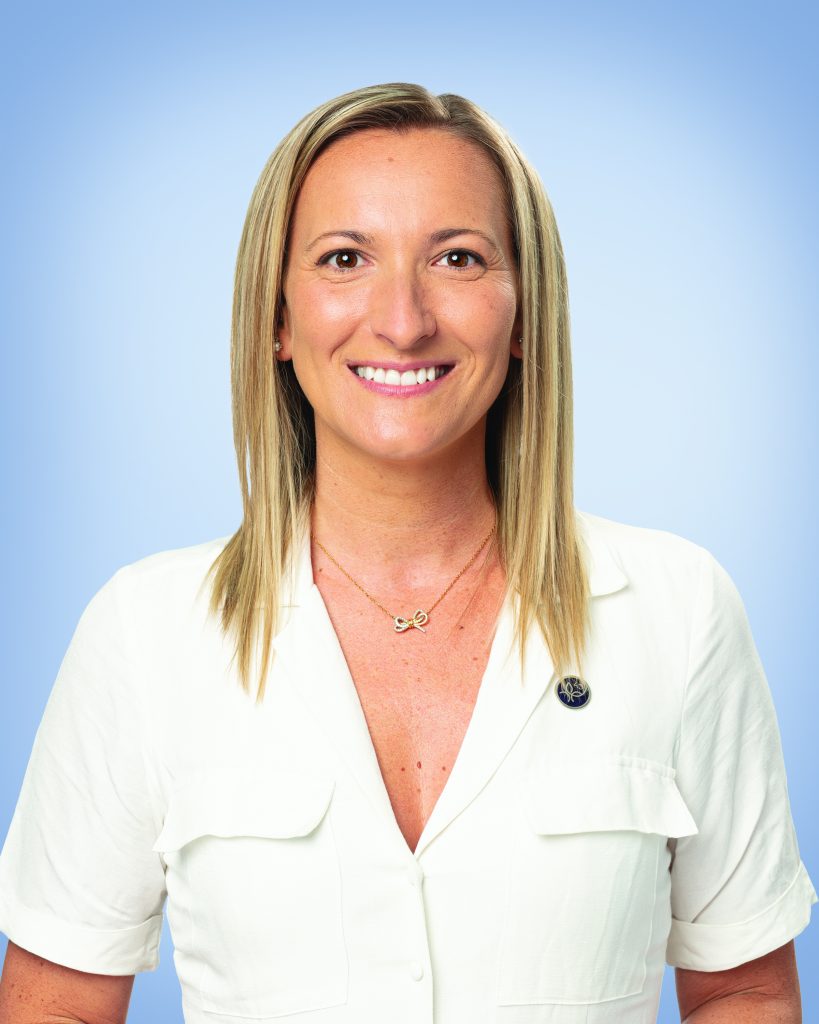
Xavier Mercier Méthé: Before entering politics, did you already have children or plan on raising a family? When you were deciding to run for office, did your family situation significantly influence that decision?
Madwa Nika Cadet: The issue of work–family balance was absolutely central to me when I decided to run. My son was born in 2022, an election year. The election took place on October 3, so at that time I had a baby who was only a few months old, and the issue of balance came up immediately in my mind. What allowed me to take the leap anyway, without thinking “this is impossible; I will never be able to reconcile these two new realities—becoming a mother and an MNA in the same year,” was the support of my immediate circle, both at home and within my extended family. That allowed me to grow in both roles. Children, especially young children, need support at every stage of their lives, and the younger they are, the more quickly those stages evolve. I weighed the issue with my loved ones, and they stepped forward and said: “We’re going to do this as a team.” That support laid the foundation that allowed me to enter politics while taking into account the fact that I had a very young child.
Pascal Paradis: I already had two children when I entered politics. In my case, I had just separated from the mother of my children after 20 years together. My entry into politics happened quickly—it was a byelection—and I was experiencing a lot of turbulence in my personal life. Despite the separation, we’ve maintained a very good relationship. When I was given the chance to board the train of politics, I immediately contacted her to say, “We need to talk, because I have this opportunity. I want to do it, but it’s a family decision.” The two of us got together with our two children for family meetings. We explained the advantages and the disadvantages. We said that we would only go forward if everyone agreed. Otherwise, I wouldn’t do it. Obviously, we explained things in simplified terms, but we trusted the children. They made the decision with me. Even today, I check in with them regularly: I ask them if I am getting good grades on my “Papa” report card. It really is a family endeavor, and it’s very important that it be that way.
Marilyne Picard: We were a large, blended family. We had five children before I entered politics. I had been at home for about six years as a stay-at-home mother, taking care of the children. So, I had thought about this issue before submitting my candidacy to my party. Like my two colleagues, it involved family discussions. For us, it was very clear that if I were elected, their father would stay at home for an indefinite period. Since I have a young daughter who is very ill and severely disabled, Dad had to be willing to take on that role. We also had a great team at home with the brothers and sisters, who helped their father a lot. So, my entry into politics was carefully thought out. I didn’t fully know what I was getting into, but I took the leap.
Xavier Mercier Méthé: Do you feel you have a role to play, at the Assemblée nationale, in addressing the work–life balance issues experienced by the Québec population? Does your personal experience influence your work as an elected Member?
Marilyne Picard: What happens at home certainly impacts our work as parliamentarians. This year, I created a program for bereaved parents. Having experienced the loss of two children, I was able to push that issue forward in Parliament. I have also promoted the issue of home care, since I live that reality with my daughter.
Madwa Nika Cadet: For me, the reality of having young children—I just gave birth to my daughter, who is now six months old—and the challenges of work–family balance are at the heart of the various positions I have taken. I think the public wants to see that parliamentarians have lived these experiences, and talking about them can encourage others to believe they can get involved in politics. It also helps avoid a disconnect from the reality of many Québec families. The sense that elected officials share these realities and understand what it means to have young children is important. I find that it allows me to approach issues differently. Before, family and education issues were, for me, more theoretical or based on past experiences. Now, as I deal with these challenges daily, these feelings aren’t a distant memory. They’re a very present reality. I’m also thinking of my work as a member of the Select Committee on the Impacts of Screens and Social Media on Young People’s Health and Development. I was pregnant during that mandate, and it made me reflect on what it would mean for my child who was already born and for the one on the way. That allowed me to intervene credibly, with very concrete examples from daily life, and to say: “This recommendation may look great on paper, but in real life it doesn’t align with the modern family’s reality.” I feel that the challenges of work–family balance are an integral part of my political discourse and my political action.
Xavier Mercier Méthé: Some of you have held parliamentary responsibilities related to family issues. Do your experiences as parents make you more eager to take on mandates related to youth or family?
Madwa Nika Cadet: We often volunteer for mandates that speak to us. That’s why I volunteered to be a member of the Select Committee. I was thinking about how my family reality could influence my work. It’s not entirely coincidental, but parliamentary constraints also come into play.
Pascal Paradis: Even though our lives are often out of the ordinary in terms of intensity, obligations, pressure and workhours, we remain citizens like everyone else. I have to manage my life as a single parent every other week. I have to cook, clean, do the laundry and maintain my home. I also find it very useful to discuss my work with my children. Recently, I made public statements about the digital age of majority—that is, the idea that companies should verify children’s age so that they don’t have access to platforms until they are 14. So, as you can imagine, I’ve made an effort to experience video games and social media with my children. That’s allowed me to have discussions with them about their experiences and what affects them. That helped me balance my position with their reality. I read the report by the Select Committee on screens and I was able to discuss it with my children. Other issues like confidentiality and privacy arise when you’re involved in this type of mandate. I did an interview once where a journalist wanted to know what my children did on social media. I said: “No, I’m not going there. I’ve discussed it with them and with their mother, and they don’t want me to talk about their specific situation in public, except to say that I also experience these issues with my children.”
Xavier Mercier Méthé: Parliamentary life is out of the ordinary, particularly because of scheduling demands and travel. How do you reconcile these constraints with your family life? Do you have any strategies?
Marilyne Picard: My husband and I decided that when I have to attend events—for example, dinners with seniors’ groups or occasions of that kind—he would often accompany me in the evenings and on weekends, because otherwise we wouldn’t see each other. He doesn’t mind accompanying me. At least we spend time together. It’s true that I see the children less, but I try to take more frequent vacations where we really have quality time together. That’s how we juggle a very busy schedule.
Madwa Nika Cadet: It requires an enormous amount of organization and discipline, because with our schedules, we work seven days a week. So occasionally, you have to carve out time for yourself and find a balance. Having a family life is also a responsibility that you can’t neglect. Even with the support of those around us, the responsibility ultimately rests on our shoulders. I often like to say that at our place, we have weekly family meetings, complete with an agenda. We figure out the logistics of the week and how we’ll manage to see each other. My husband and I block time in our calendars—moments just for us—because otherwise we wouldn’t see each other. The same goes for important events. My son is getting old enough to have his own schedule. We need to be present—for karate class, soccer practice, and so on—and integrate all of that into our schedule. It’s not easy. Of course, there is our parliamentary work, which is more visible, but on weekends, when we return to our ridings, there are spaghetti dinners, seniors’ clubs, and so on. Our evenings are often taken up. Sometimes you also have to know how to say “No”. It’s never perfect; you have to live with imperfection. This year, I gave birth to a baby girl, which added a certain level of complexity. She accompanied me throughout the fall session. The two of us travelled by car between Montréal and the city of Québec. We had to make changes to my travel routine for it to work. The Assemblée’s drop-in daycare, and it can’t be said often enough, is essential. I am a strong advocate for it, because it’s what allowed me to continue my work. I didn’t miss a single day of the parliamentary session this fall because the daycare was there to take care of my daughter. Several times a day, I would go see her for feedings. We managed to juggle everything thanks to the flexibility of other parliamentarians, who took my situation into account, and thanks to the daycare, which ensured that my child did not become a burden on staff or a reason for absences.
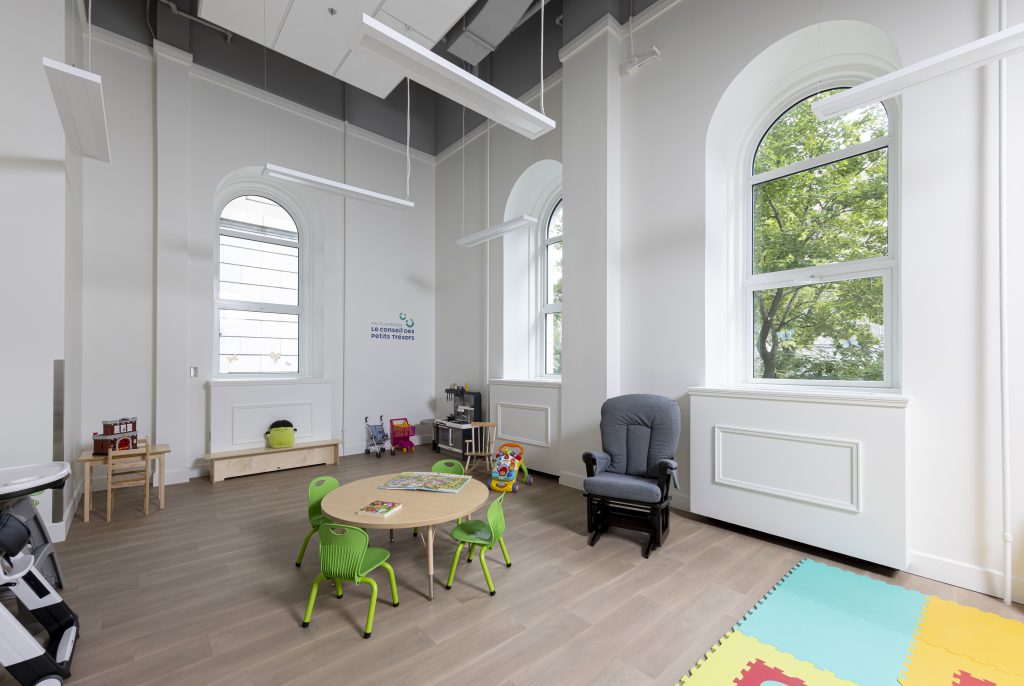
Marilyne Picard: Ms. Cadet makes me think of respite care. We have a young daughter who is ill, so we have access to family support services for her. On weekends, she sometimes goes to respite care. These services are very helpful for us, just like the daycare. I try to take my daughter to the Assemblée at least one week per session. I say “I try,” because as soon as there’s snow, I don’t want to be in the city of Québec with a wheelchair on the slopes of Parliament Hill. But it gives my husband a break when I bring her to Québec for the whole week.
Pascal Paradis: Workplace daycares are extraordinary. I would say there is no equivalent once children are older. I’m fortunate to have very independent children, but our lives are absolutely crazy! That makes achieving a work-family balance complicated. I already worked a lot before. When I considered politics, I knew it would require a lot of sacrifice, but I said to myself, “I already work so much now, I don’t see how I could work more.” But, yeah, I work even more now! Despite all their goodwill, the people around us have difficulty grasping this reality, how hard it is to balance everything. It’s doable but it’s hard. It takes a lot of discipline. Politics doesn’t wait because the news doesn’t wait. Debate in the Chamber doesn’t wait. Nothing waits in politics. It’s a challenge. There’s a paradox to work-family balance because while it’s my private life, my entire team has to be aware of my custody schedule and my children’s activities. Both of them play basketball, and for me it’s extremely important to be present at their games. I have to be present, because that’s where my heart is too. But you have to integrate it into your schedule. Otherwise, you risk pushing it aside because so many political emergencies and priorities come up. You can’t be afraid to tell your colleagues: “Remember that I’m a single father and that I have my children.” They’re independent, but you want to enjoy those moments. The older they get, the more their needs change. Right now, that means sports activities, social activities, and so on. I want to take the time here to acknowledge and thank my colleagues, particularly the women who, in a nonpartisan way, pushed the Assemblée nationale to rework its schedules, especially regarding parliamentary committee work. I can’t even imagine what my life would be like today if we still had intensive sittings like those in the past, which didn’t end before midnight on weeknights. Thank you to the pioneers. And thank you to the men who joined them at the time to say, “We need to rethink this to make our lives more manageable as fathers, mothers, brothers, sisters and children. We have to find a balance between our responsibilities to our families and our obligations to the public and to our colleagues.”
Marilyne Picard: I think one of the first things we learn when we take on this role is the advice given by those who were Members before us, who say: “Take care of your family, because your loved ones will stay, and politics won’t.” I think our generation understands that this is an issue. We always have to keep in mind that with our children, the time that passes will never come back. We have to make the most of it, one hundred percent.
Madwa Nika Cadet: First of all, we need to acknowledge the work that has been done to make our parliamentary schedules a bit more manageable. In the past, sitting very late or even overnight was much more common than it is today. That was an obstacle to work–family balance, and it discouraged many women from entering politics. But despite that progress, the pace remains relentless. It’s easy to start neglecting our loved ones because there is a constant sense of urgency, the impression that everything that comes up in politics is crucial, and that we can always do more. When we’re not giving 150%, we think, “Oh my God, I’m not doing enough!” It takes discipline. You have to put certain moments in your calendar and tell yourself, “It’s okay. Today we’re decorating the Christmas tree, and that’s important.” You can’t always postpone family activities. You have to remind your team and the people around you, and speak your truth. That is crucial, because when colleagues have lived through similar experiences, they understand. It’s different for people who have never had to deal with work–family balance challenges because they entered politics later in life or never had children. People will say: “Well, you’re available! You have a gap here in your schedule.” As Pascal said, you have to schedule and block off time. We need to keep talking about this reality in order to normalize it. When we do that, it invites others to do the same. It normalizes the fact that some things can wait and be imperfect. Sometimes it’s a bit uncomfortable, but if we want to meet the challenge of work–family balance, we don’t really have a choice.
Xavier Mercier Méthé: What advice would you give to a future Member who is embarking on the challenge of work–family balance?
Pascal Paradis: I think it’s doable. I encourage people who have a family life to go for it, because people like us can bring a special perspective to public action. It’s important to have parents at the Assemblée nationale who live these realities. It’s a challenge, and that does need to be said. It takes discipline and commitment, but it can be done. I think all the members who are parents would agree that it takes teamwork with the people around you. The more things are made clear in advance, the more the downsides and the joys will be experienced together. Because political life has its joys. There are so many wonderful moments. We meet fantastic people. We learn so much about everything that’s happening in our society. I think it’s wonderful for my children to have the opportunity to experience that the way few people can, like Members of the Assemblée. But there are downsides, and the more we act as a team, the better it works. My children feel that they’re part of the team, and I think they appreciate that. We can’t forget that there are also many difficulties. We can’t look at the situation through rose-tinted glasses. But it’s important to mention everything that’s beautiful about it too, because often we tend not to.
Marilyne Picard: I would just like to say that everything is possible. You just have to be well organized and have good people around you. I really think that’s the key. As Pascal said, it’s amazing how much beauty there is in politics. That’s the difficulty, because when it’s hard, it’s really hard. But when it’s good, it’s really, really fun. We’re on a roller coaster all the time. I think our children are along for the ride with us, through the lows and the highs. But it’s extremely rewarding. If I can do it, if my family can do it, everyone can. You just have to be well organized.
Madwa Nika Cadet: Like my colleagues, I think it’s important to be honest with potential parliamentarians and to give them a clear picture of the fact that this role comes with difficulties, regardless of the resources provided by the Assemblée. As I said, I’m a strong advocate for the drop-in daycare. I believe we need these institutional tools to overcome obstacles and encourage young women and men to run, and also to stay. Encouraging people at the outset is one thing, but we also need resources so that people want to continue the adventure, because it can be exhausting. I would tell that person that if they have the level of commitment required to take this step and decide to serve their community, it will be a wonderful adventure, and that it is a privilege to be elected and to experience all the exhilarating moments of politics. Ultimately, each person makes the decision that reflects their own reality. All choices are valid. Some people say: “No, at this point in my life, it doesn’t work, but maybe at another time.” Others say, “I don’t want this to be an obstacle; I don’t want fear to stop me from going for it, because we can organize ourselves and put everything in place to make it work.” It’s up to that person not to let fear eat away at them, and to make an informed choice.
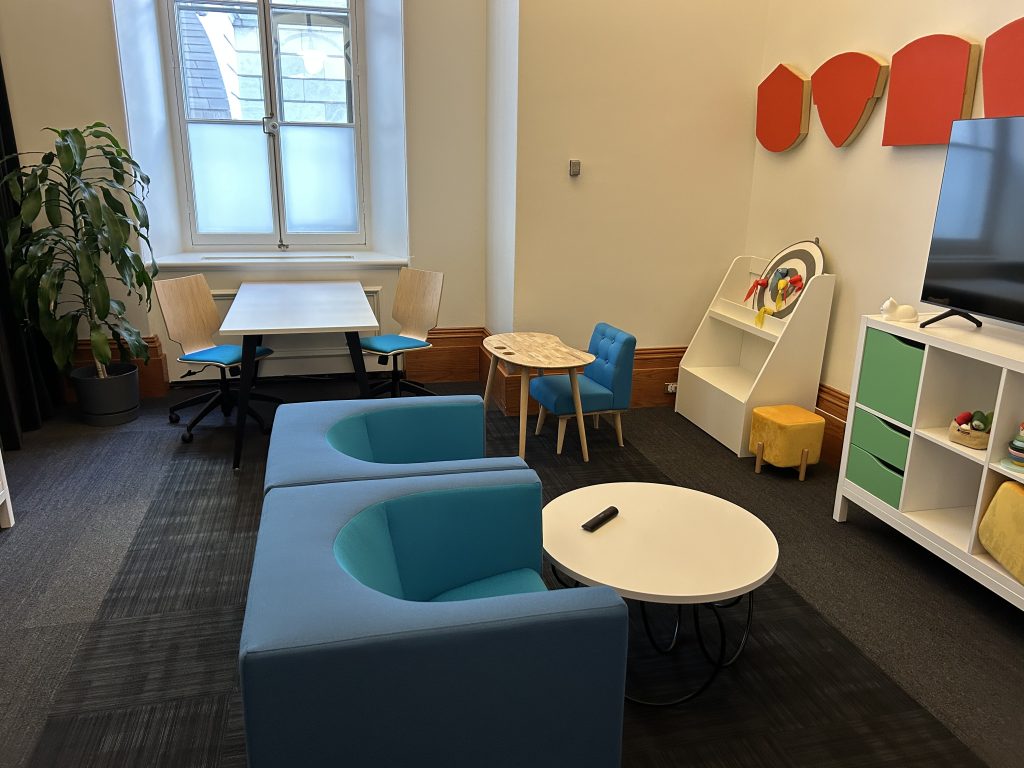
Xavier Mercier Méthé: In 2019, a survey of parliamentarians and political staff identified several work–family balance measures. Some have been implemented, such as a simplified access procedure, takeout meals, a nursing room located near the Chamber, a family room and the drop-in daycare. As parliamentarians, are you familiar with these measures? Which ones do you consider the most useful?
Marilyne Picard: I’ll share a quick anecdote about the first day I brought my daughter to the Assemblée’s drop-in daycare. I had her wheelchair, her feeding equipment, her medication… This big bag on the back of the chair. I had to go through security because even though I had an access card, she didn’t. The security guard asked me to open the bag and take everything out because there was metal inside. It was awful. But I saw the Assemblée’s willingness to listen, because we managed to get an access card for my daughter. She has her own little card to enter Parliament, as if she were an employee. That’s been incredibly helpful for us, because now, when I come to Parliament with her, I get through security very quickly. That measure helped me a great deal. And of course, the daycare, as we’ve mentioned.
Madwa Nika Cadet: What’s truly extraordinary is that the drop-in daycare adapts to our parliamentary schedule. When there’s a closure motion and we have to be at the Assemblée at 7 a.m., we call them and explain the situation. They open at 6:45 so my daughter can arrive a bit earlier. When we sit late, say until 10:30 p.m. on some evenings, there’s an educator there, smiling, to take care of our child. I find that attentiveness and flexibility very important. At first, you don’t want to bother people with your situation. But you can rely on this resource. The fact that they are professionals and that they listen, adapt, and say: “Here’s how we’re going to make sure everything works. I’ll write to you, send you photos. If something changes, we can be flexible.” It’s extraordinary. You really feel heard and you don’t feel like a burden because of your situation. It makes a huge difference. I also used the nursing room. We’re fortunate to have that kind of space close to the Chamber. When you have a workplace that takes into account our needs as young parents, you realize just how much our role as parents can be intrinsically integrated into the Assemblée.
Xavier Mercier Méthé: Mr. Paradis, your children are older. Do they often accompany you to your parliamentary workplace? Are there any facilitating measures?
Pascal Paradis: They rarely accompany me to the Assemblée nationale. Parliamentary work generally takes place during the school year. And at their age, it’s not easy to get them interested in constituency activities, even when they might get something out of it. For children their age, there really aren’t any accompanying or facilitating measures. What would be helpful is easier access to support services or help at home. I’m also aware that the costs involved with these services are significant, so I’m not suggesting there should necessarily be financial support. But realistically, if you want the time to do this very demanding job, to give citizens what they need, and do parliamentary work, it’s hard to juggle everything. And if you also want to be present, at least a little, for your children, then something else has to give, and managing a household is difficult. There’s no other way than to rely on third parties when you realize you can’t do everything yourself anymore. In my case, as a matter of principle, I like to cook for my children. I could order in or hire someone to cook, but for me, that’s an important part of my role as a father. So how do you reconcile that? I do it at night. I cook late in the evening. But it’s important to me. So it’s difficult. I myself don’t know how the Assemblée nationale could help me more. This is something that ultimately gets managed in each household.
Marilyne Picard: What really changed our lives was having someone come in to help with housecleaning. Honestly, that was just too much in my life. But for teenagers, I think it would be interesting to create a day when our teens come to Parliament, so they can experience what we do every day. A bit like Student Parliament, so that parliamentarians’ children can better understand our work. When I text my son in the evening and say, “I can’t talk, I’m in parliamentary committee,” does he really know what that means? And then he replies, “Can you send me some money?” Well, yes—but I’m in the Chamber, give me a minute! For them, it remains abstract.
Xavier Mercier Méthé: Do you think the measures implemented by the Assemblée nationale could inspire other parliaments or public institutions?
Madwa Nika Cadet: One hundred percent. Honestly, I don’t know which other Canadian parliaments have a drop-in daycare, a family room or a nursing room. But we’re seeing more and more young parents deciding to run for office. And sometimes both parents are elected officials. We see it in our Parliament and in the federal Parliament. And I see how our services could become examples of what could be done elsewhere in the country.
Marilyne Picard: We see it during interparliamentary missions. We’re fortunate to have all of this in Québec. We always talk about it to the other parliamentarians we meet.
Xavier Mercier Méthé: Conversely, when talking to your counterparts during interparliamentary missions, do you hear about other initiatives that could serve as a source of inspiration here?
Madwa Nika Cadet: I would say having standardized leave periods, as we see at the federal level and in some other legislatures around the world. For example, when we decided to have a second child, the issue came up. We built our family plan around the parliamentary schedule to take advantage of the summer period and so I wouldn’t miss too many sitting days. But that’s not realistic for everyone. Having a defined, reliable leave period would put us all on the same footing. I think it would remove some of the arbitrariness that currently weighs us down and adds to our stress. We want to give 110%, and we don’t want our family plans to be seen as a constraint. To balance all that, instead of handling pregnancies informally among ourselves and bearing the burden individually, I think it would be worthwhile to establish a standard. We would have to think about how long that type of leave could last and what our responsibilities would be. Could we step back only from parliamentary duties while continuing to do our work in the riding? Defining these elements would be the next step that could truly make Québec a model for legislatures everywhere.
Marilyne Picard: I agree with Madwa. It would be such a good idea, especially for when you are going to have a baby. I’m also thinking about family caregivers or people who need to be away because of bereavement. Right now, it largely rests in the hands of our party. As Madwa said, there’s still pressure to return to Parliament, because it’s part of our role. Especially for births, I think it would lift a burden from young parents, but also from the party. At the same time, we’re very aware that we don’t have parental leave as such. We remain involved in our riding and continue to work remotely, even when a birth or another major event occurs. It’s not that we would stop working, but it would be less uncomfortable to have to be away.
Endnotes
- Opened in fall 2023, the drop-in daycare aims to facilitate work–family balance by offering occasional childcare tailored to the specific realities of the Assemblée nationale. The service is available in particular to Members, political staff and administrative staff of the Assemblée nationale.
- In Québec, in 2022, section 35 of the Code of ethics and conduct of the Members of the National Assembly was amended to provide that absences related to pregnancy, to the birth or adoption of a child, to maternity, paternity or parental leave, or to a caregiving situation do not constitute a breach of the attendance obligation set out in that section. Since the duration of the absence is not defined, it is determined on a case-by-case basis.