

Casting the Deciding Vote in British Columbia’s 43rd Parliament
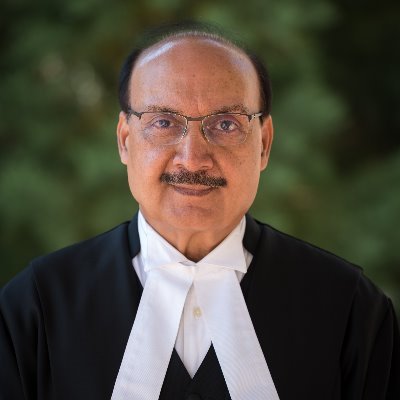
Hon. Raj Chouhan
Although it is relatively rare for Speakers in Canada to find themselves in a position where they must cast a deciding vote on a matter, this has not been the case in British Columbia since early 2025. In this article, the Speaker of the Legislative Assembly of British Columbia explains the unique circumstances that have led to an exceptional number of tie-votes and outlines his process for casting the deciding vote. This article is adapted from a presentation delivered at the CPA Canadian Regional Conference on July 23, 2025.
Hon. Raj Chouhan has been Speaker of the Legislative Assembly of British Columbia since 2020.
Introduction
When questions are put to a vote in the Legislative Assembly of British Columbia, they must be decided by a majority vote from the Members present, apart from the Speaker. The Speaker, though present, abstains from voting because “confidence in the impartiality of the Speaker is an indispensable condition of the successful working of procedure, and many conventions exist which have as their object not only to ensure the impartiality of the Speaker but also to ensure that that impartiality is generally recognised.”¹ Abstention from votes is in keeping with this objective, as is the conventional practice of Speakers to forgo participation in caucus meetings and partisan activities.
However, when it comes to the Speaker’s abstention from votes, there is one exception. Both the federal Constitution Act, 1867 (30 & 31 Victoria, c. 3 ([U.K.]) and the British Columbia provincial Constitution Act (R.S.B.C. 1996 c. 66) provide that when a vote is tied, the Speaker will enter the deciding vote. In British Columbia, Standing Order 10 reinforces that in the event of a tie, the onus of the “casting vote” falls to the Speaker. It also notes that if the Speaker chooses, they can record the reason for their vote via the Journals of the House.²
It is not only the Speaker who may be required to provide a casting vote. Any Member serving as a Presiding Officer—such as a Deputy Speaker or as a Committee Chair—must exercise a casting vote in the case of a tie in order to ensure that the House, or a committee, is able to come to a decision on a specific question. Impartiality is a guiding principle for all Presiding Officers serving in these roles and is essential to earning and maintaining the respect and trust of all Members.
The Casting Vote in British Columbia’s 43rd Parliament
Before I was elected to the Legislative Assembly of British Columbia in 2005, I worked in labour relations. I cut my teeth as an arbitrator and mediator—experience that continues to serve me well in the role of Speaker, especially in our current parliament because the number of government and opposition Members is tied, excluding my seat.
Most Speakers will never find themselves having to break a tie in the House. Casting votes in our federal Parliament and provincial and territorial legislatures are rare. For example, in over 158 years since Confederation, a casting vote by a Speaker has been required just 11 times in Canada’s House of Commons.³ Comparatively, 11 casting votes, by the Speaker and other Presiding Officers, were required in the final week of B.C.’s 2025 spring sitting period alone. Another two were required in the 2025 fall sitting period, for a total of 13 casting votes in the first session of British Columbia’s 43rd Parliament. The 2026 sitting year appears to be on track for continuing this trend.
Even one casting vote could shake Members’ trust in a Presiding Officer’s impartiality, particularly in a case where a vote could be perceived to benefit the political party they were affiliated with upon election. However, this need not be the case. Through my work as an adjudicator, I came to value transparency as a mechanism for accountability. It is important to be able to demonstrate that one’s professional decisions were and are anchored by principle and policy—not personal favour. I have learned that if I am consistently relying on the same principles to guide my decisions, then I can readily and confidently point to a familiar rationale for every decision. Outlined below are the principles that have guided me and our team of Presiding Officers through a historic number of casting votes in the 43rd Parliament.
Principles of the Casting Vote
Fortunately, Presiding Officers have well-established Westminster traditions and principles upon which to draw when they are required to break a tie. These date back to the late 18th and early 19th centuries and have been refined over time, always in the interest of preserving a Presiding Officer’s commitment to impartiality.
In 1844, Erskine May determined that “…to avoid any imputation upon the Speaker’s impartiality, it is usual for the Speaker, when practicable, to vote in such a manner as not to make the decision of the House final.”⁴
In the context of legislation, I interpret this to mean voting for a bill to proceed to the next stage of debate. For example, when applied to a bill at second reading, this approach would allow it to move forward for further examination at committee stage. Conversely, a negative vote at this stage would defeat the bill, ending any further opportunities for consideration. Succinctly put:
- Presiding Officers should cast their vote in a manner that allows for further discussion whenever possible. (Or, don’t kill the bill!)
Sometimes, however, voting in a manner that enables further discussion is not possible. In such cases, the Presiding Officer should consider casting their vote in the direction that maintains the status quo, one that allows the matter to be maintained in its original form and revisited at a later time. For example, in the case of a hoist or reasoned amendment at the second reading of a bill, the Presiding Officer should vote against the amendment. This is because if such an amendment were to pass, it would defeat the bill and amount to a final decision. This is the basis for the second principle, which is in keeping with the traditions that inform the first principle:
- When no further discussion is possible, decisions should not be made except by a majority. (Or, don’t kill the bill part II.)
Extending from the provision that decisions should be made by a majority that excludes the Speaker, the third principle is that the Presiding Officer should:
- Vote in a way that leaves a bill in its existing form. In this case, when voting on an amendment to a bill, a Presiding Officer should vote against the amendment in order to leave the bill in its existing form, thereby preserving the status quo.
Taken together, these three principles form a reliable template for Presiding Officers to vote predictably, consistently, and impartially, guided by rationale that is grounded in convention.
Applying the Principles
During B.C.’s 2025 spring sitting, two bills—Bill 14, the Renewable Energy Projects Act, and Bill 15, the Infrastructure Projects Act—were subject to extensive debate at Committee of the Whole consideration.⁵ Numerous amendments during committee stage debate were proposed to the two bills, including one from a Minister. In keeping with the second and third principles above, the Committee Chair’s casting votes defeated all proposed amendments on both bills. By voting against the proposed amendments, the Chair ensured that the bills remained in their original forms, thereby preserving the status quo.
Tied votes on the motions for third reading of both abovementioned bills required me to exercise casting votes. Most importantly, both Bills 14 and 15 had been declared confidence matters when they were introduced by the government. As such, voting against third reading of either of them would have resulted in an expression of non-confidence in the government. In these unique scenarios, in addition to the principles above, I also considered that the casting vote should not be exercised in a way that would express non-confidence in the government, thereby setting the expectation that the government would resign or seek dissolution of the Legislative Assembly for a general election. In each instance, I further considered how the bill, declared as a confidence matter, had passed second reading with majority support and how the bill had not been amended during committee stage. As such, I cast my vote in favour of the motion for third reading of each bill and provided the reasoning that these confidence matters had passed earlier stages of consideration with majority support.
In the subsequent 2025 fall sitting period, these experiences further guided me as I found myself in a very similar circumstance making a casting vote on the motion for third reading of Bill 31, Energy Statutes Amendment Act, 2025. In casting my vote, I first and foremost considered that this Bill had been declared a confidence matter and, as with Bills 14 and 15, I voted in favour of third reading, noting that the Bill had passed earlier stages of consideration with majority support.
There are other recent precedents in Canada for casting votes on confidence matters, too, and both the Speakers’ decisions and their rationales are consistent with mine. One is from 2004 by then-Speaker of the Legislative Assembly of Saskatchewan, Myron Kowalsky, who voted in favour of the motion to adopt the Address in Reply to the Speech from the Throne, stating that only a majority should determine its defeat on a question of confidence. In 2005, then-Speaker of the House of Commons, Peter Milliken, was required to cast a vote on second reading of the budget bill. The Speaker voted in favour of the second reading question to ensure that the government was not defeated and explained that the decision was guided by established principles, not politics.
Conclusion
The responsibility of casting a tie-breaking vote is weighty, but Speakers and Presiding Officers need not fear it. A strong commitment to constitutional and procedural provisions is essential—but every Presiding Officer ought to have that already. Thus, a Presiding Officer can be assured that by following a principled approach, they will strengthen not only their own confidence, but the confidence of all Members of the House in their ability to act impartially in moments of greatest contention.
Notes
- Natzler, D. et al., eds. (2019). Erskine May’s Treatise on The Law, Privileges, Proceedings and Usage of Parliament, 25th ed. UK Parliament.
- Ryan-Lloyd, K. et al., eds. (2020). Parliamentary Practice in British Columbia, 5th ed. Legislative Assembly of British Columbia. https://ppbc.leg.bc.ca/index.html
- House of Commons. (2026, Feb. 1). Casting Vote of the Speaker – 1867 to Present. https://www.noscommunes.ca/speaker/en/role/casting-votes.
- Natzler, D. et al., eds. (2019). Erskine May’s Treatise on The Law, Privileges, Proceedings and Usage of Parliament, 25th ed. UK Parliament.
- In British Columbia, the practice is for all government bills to be considered by a Committee of the Whole at committee stage. This means that another Presiding Officer chairs those proceedings and is required to exercise a casting vote in the case of a tie.