

Representation and Collective Action: An Interview With The Founder of Commonwealth Parliamentarians with Disabilities
A serious injury sustained during a hockey game changed 14-year-old Kevin Murphy’s life. But his decision to begin advocating for accessibility in his community and beyond has helped changed the lives of countless other people. In this interview, Kevin explains what inspired him to become involved in parliamentary politics and how he used his position as Speaker of the Legislative Assembly of Nova Scotia to advance an initiative to help encourage and support other persons with disabilities in Commonwealth countries to seek office.
Interview with Kevin Murphy
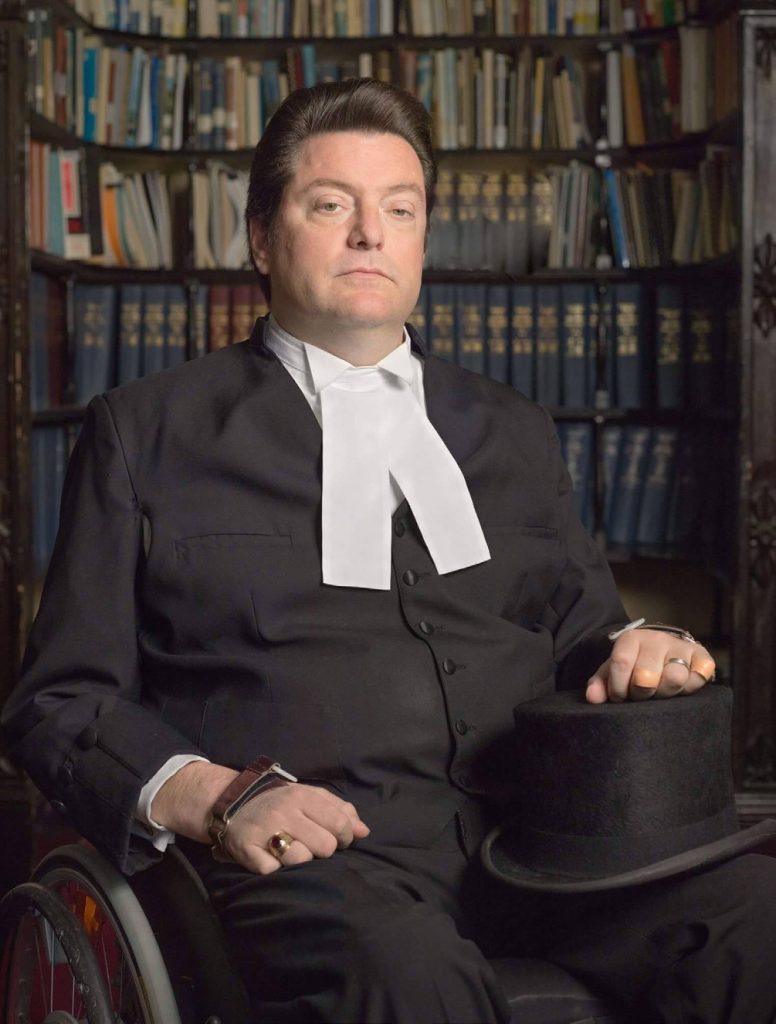
Canadian Parliamentary Review: You were first elected in 2013. Can you speak a little bit about what drew you into parliamentary politics and then, once elected, what sparked the idea for the Commonwealth Parliamentarians with Disabilities (CPwD) group?
Kevin Murphy: I was injured playing hockey when I was 14. One of the first things that I had to do was to learn how to advocate for myself, for the things that I needed.
For instance, I was raised in a very small rural community. Our school was a typical two-level square brick building with steps at the front door. It was built 30-40 years prior to me going there. I know I wasn’t the first person with the disability to go to that school, but I was the first person with a disability to say to the school board “Hey, I can’t get in the front door in my wheelchair. There’s no bathroom that I can use and it’s a two-level school. How do I get to my classes on the top floor?”
That was quite a conundrum for the school board, you know? So, I, together with my family, had to learn to write letters to advocate for what I needed. I quickly learned how to communicate the situation to suggest solutions and not just identify a problem and complain about it. I would say: “Hey, this is something that we can improve on and here’s what’s needed. Here’s what we can do.”
Eventually we got the proper ramp at the front door, the washroom was renovated, and an elevator was installed. I realized that these are the things that I needed at that moment, but these are legacy changes that will benefit many other people who will come after me with similar situations.
I encountered the same kind of scenario when I went to Saint Mary’s University. At the time the administration made claims to me that it was the most accessible university east of Carleton University in Ottawa. But I encountered many of the same challenges there and engaged in the same kind of process. I also realized that I wasn’t the only person with the disability in the community, but I was probably the most visible one and also probably the most active one. As I looked around at all these people in wheelchairs and walkers and with seeing eye dogs, I realized again that when I was writing letters requesting a door opener on a residence building or a washroom to be renovated it would not only benefit me, but many, many others.
That made me think about the future and what different levels of government were doing. I realized all these people are setting policies and making decisions, but people with disabilities did not seem to be a consideration in this whole process. I wondered, “Why are we still designing buildings that aren’t accessible from the get-go?” Until we get real live people with disabilities sitting in those decision-making seats, we’re not really going to make a whole lot of progress on some of the bigger issues.
When I graduated from university, I ran for municipal council in in Halifax County for my area and I didn’t win. I didn’t put myself out there as the “disability candidate” or anything. But I ran, I came second, and it was a tremendously valuable and insightful experience for me and kind of whet my appetite for possibilities to get further involved in the political system.
I have a long history of being involved in the community. For instance, I joined my local volunteer fire department. Obviously, I’m not going to be on the fire truck fighting fires as a quadriplegic wheelchair user, but I had a commerce degree, so I became the treasurer at the fire department. I got involved in whatever I could do to contribute, and over the course of my early business entrepreneurial career, I remained an involved and highly visible person in the community.
From around the year 2000, my phone started ringing. I was heavily involved in the disability advocacy community, sitting on lots of boards and advisory committees in the metro Halifax/Dartmouth area. Probably for three elections in a row, all three parties called to see if I would be interested in putting my name on the ballot for them. But I always found some reason not to do it. I was recently married, and we had young children during that time, and busy with my business interests
One of the efforts that I had been involved with was creating what was then called the self managed attendant care program here in Nova Scotia. That effort led me to a young backbencher in the 3rd place Liberal Party, named Stephen McNeil.
He reached out to me and said he knew of someone who could benefit from this (self-managed care) program. He offered to help us try to get the legislation through. Long story short, he was able to get this bill put through to create the Nova Scotia Self Management Attendant Care Program. We kept in touch, and he invited me to some of his Liberal party gatherings. I didn’t self identify as a Liberal or anything, but when Stephen decided to run for the leadership, he called on me to help him shape his positioning on disability issues and to a certain degree, some business and economic policies.
When Stephen called ahead of the 2013 election to ask me to run, I spoke with my family, told them that this was something I wanted to do, and they supported me. I knew that it was important that I could do a good job for my community as a representative on all issues and opportunities, but also from the perspective of persons with disabilities, there was nobody in government who “looked” like me.
I put my name on the ballot, and we got elected to a majority government. Within a few short days, the premier nominated me to be Speaker of the House.
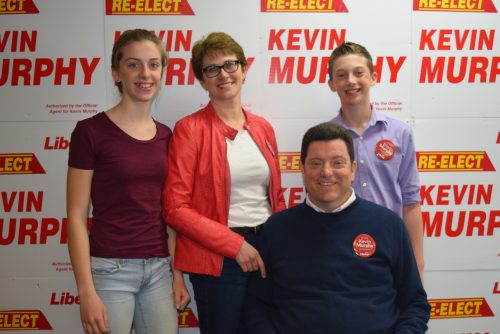
CPR: When and why did the idea for the Commonwealth Parliamentarians with Disabilities group come about?
KM: When I attended my first Canadian Presiding Officers’ conference under House of Commons Speaker Andrew Scheer in January 2014, I quickly realized that I had an opportunity to have a voice on issues that mattered to me. Perhaps it was more subtle or muted voice compared to some others who are cabinet ministers, but as the leader of the legislative branch of government in Nova Scotia, I had a voice. I quickly found my comfort zone with my group of Speaker peers.
Looking across the landscape of elected representatives, both federally and provincially, there were other elected people with disabilities, but only a handful. There was Steven Fletcher federally and then provincially, and Sam Sullivan and Stephanie Cadieux on the West Coast… maybe half a dozen of us combined federally and provincially. I was able to say to my fellow Speakers that the goal of any democratically elected government is to be representative of the population of which it was elected to serve, but I didn’t see enough people with disabilities sitting in these elected seats, in proportion to the actual population numbers.
With the support and encouragement of my fellow Speakers, we recognized this was an issue that we collectively could advance and try to make a difference.
It started with a presentation I made to that group, but then I also was able to use my direct line to the Premier’s office as Speaker to raise issues that I believed should be considered when coming up with Nova Scotia policy and legislation.
We started working on the Nova Scotia Accessibility Act, which we passed in 2017. I know in my heart that if I wasn’t sitting at the caucus table, being that voice for persons with disabilities, it wouldn’t have happened. As we developed our policy positions and government agenda, the landscape of demands competing for attention is just so crowded that it just magnifies the importance of having a lived experience voice from the disability community there. Whether it’s people with disabilities, or diversity in terms of gender balance or people of colour, it’s important to have these voices present to offer perspectives that differ from traditional stereotypical political process thinking of people making decisions for others without really considering the effects and outcomes on that population.
When Carla Qualtrough was elected federally in 2015 and became the first Minister responsible for persons with disabilities, she, Stephanie and Sam were all in cabinets. It seemed like we had the beginnings of a critical mass. There were enough of us that I could point to what was happening in Canada and pitch the creation of a group for parliamentarians with disabilities to the Commonwealth Parliamentary Association (CPA).
I looked to the only other permanent subcommittee that was in place at CPA, and that was the Women Parliamentarians’ Network. It was created to improve the gender balance in parliaments by encouraging and supporting women to seek elected office. I thought, “Why not have the same kind of group for persons with disabilities?”
I was also emboldened by visiting parliamentary delegations from other areas of the Commonwealth where, to put it politely, ideas of democratic representation were still evolving. They would come to Nova Scotia, the oldest seat of government in our country and one of the oldest in the Commonwealth, to learn our best practices. Of course, there I am as Speaker: the guy in the wheelchair.
Some of these delegations were from countries where people with disabilities are not necessarily embraced by society. So, the notion that a person with a disability would even seek elected office, never mind get elected or hold a high position in an Assembly, is just so far off their radar. We were changing minds by setting an example by just getting elected and being that role model. I’ll only speak for myself, but that’s the whole point, right? You can influence and change policy as it relates to persons with disabilities by bringing that first voice, that lived experience to the table. Other people with disabilities in Canada and across the Commonwealth see you and say, “If Kevin can do it, maybe I can do it too…”
Not that it was all disability all the time. I knew I had a job to as the representative of my community, to contribute to caucus discussions, to speak up at the right time on a very broad range of issues. But I know my interventions, perspective and presence led to the creation of the Nova Scotia Accessibility Act. I know Minister Qualtrough’s presence at the federal caucus table led to the creation of the Accessible Canada Act in 2019. We changed minds of our fellow policy makers.
The location of government announcements, the inclusion of sign language and alternate accessible forms of communications for committee hearings, the legislative broadcasts, the documents that government produces, and policies across the board. The benefits may be subtle to some, but so profound and essential to others to facilitate full participation in all aspects of government.
CPR: How receptive was the CPA to this initiative?
KM: Bringing the idea of a Parliamentarians with Disabilities subcommittee to the Commonwealth Parliamentary Association was interesting because we play an important role as the keepers of democracy. Yet in a democracy, there is always a certain amount of politicking required to get things done. It took longer than I hoped to get the ball rolling because there were several other important issues and challenges, but at the end of the day, virtually everyone recognized the value of creating this network.
But it also posed some challenges that were quite different than initiatives designed to increase representation of women or people of colour. People don’t always identify or voluntarily identify as having a disability. I’m a person who uses a wheelchair. Well, that’s pretty obvious. But other disabilities are not so visible. This made the quantitative side of things more challenging.
We started out as an informal network. We had our first meeting, fittingly, here in Halifax in 2017 where I was host. When we sought to become a formal network within the CPA, the approach was to find a disability champion in each of the seven Commonwealth regions. If we couldn’t find an elected person with a disability, we looked for an elected person who had a direct connection to someone with a disability, such as a family member. The Network was formalised in 2019.
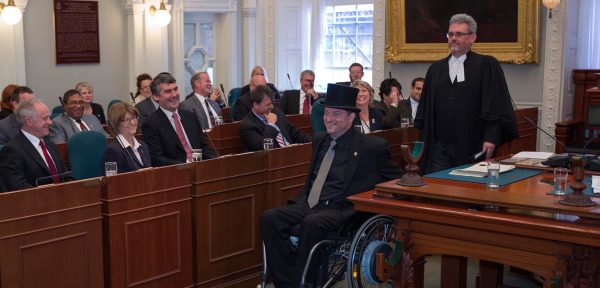
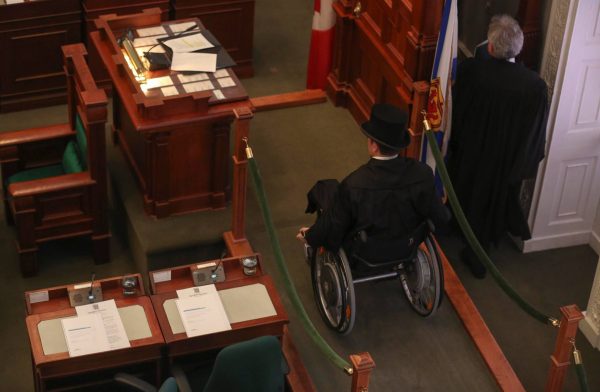
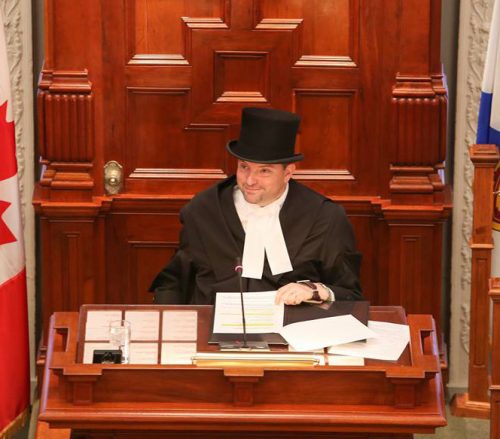
In 2020 when I was still the Nova Scotia Speaker and still chairperson of the CPwD, we had plans to be a much larger part of the CPA’s annual general meeting, scheduled for Halifax. However, just as we were making headway, along comes COVID-19, and everyone’s time and energies were focussed elsewhere. Then our Nova Scotia provincial election happened in 2021, and I was not re-elected.
CPR: What happened when you were no longer a parliamentarian, but heavily involved in promoting a group for Commonwealth Parliamentarians with Disabilities?
KM: One of the challenges I had with advancing the CPwD was the way CPA works. I had laid the groundwork for advancing this, but when I was no longer a member of a parliament, I could only be informally loosely involved.
As soon as you’re unelected, you’re out and you don’t have any official standing with CPA. I received an invite to observe the AGM meeting where it launched and if I still have an informal channel into CPA HQ, but, essentially, I have no official standing to continue that work within, or on behalf of CPA. The same thing happened to many other founding members who left parliamentary politics on their own accord or when they were defeated. These were people who I got real support from that are no longer elected. Those people still have valuable institutional knowledge of what’s happening locally. They can still make valuable contributions. But they aren’t able to really participate. As a result, I am not as informed of the activities of the network, and a lot of the personel with experience that went into creating it has largely now has moved on.
CPR: Are you suggesting perhaps creating something like an ex officio membership where there’d be recognition that you’re not a parliamentarian but still had some role where you could maintain that institutional knowledge and have that continuity?
KM: Yes. People with disabilities who have been elected are such a small group with such a unique set of circumstances and experiences, it greatly magnifies the importance of keeping in touch to ensure that we continue to grow the movement. For others yet to come. Extinction can occur easily without a very deliberate effort to sustain.
CPR: I think I get your point as well that if you have newer parliamentarians with disabilities who are elected, and if there isn’t that institutional knowledge, then you are still almost starting from scratch. They may see the bare bones of this organization, but they don’t know what has come before or what lessons have been learned.
KM: Exactly. And I think there still is a desire among former parliamentarians to help. I’ll give you an example: Access Awareness Week here in Nova Scotia. The Nova Scotia Human Rights Commission reached out to me and said, “Kevin, this is a good opportunity for us to revisit the efforts that you were making when you were in office to set up the Network. Let’s do a panel discussion that’s aimed at restarting the conversation here locally about the importance of having candidates with disabilities on the ballot so that we can get to a point where there is representation from the disability community in elected seats in Nova Scotia.”
So, I worked with them. We put a panel discussion together with me, Carla Qualtrough, Stephanie Cadieux, and a local municipal politician named Gary Mattie from Nova Scotia who has a spinal cord injury. We discussed the importance of everything you and I just talked about – having a political system that’s accessible and seen as a viable option for people with disabilities who want to get involved in policy shaping and candidacy.
CPR: When you mention an accessible system, what does that entail beyond removing physical barriers to political spaces and promoting representation as an effective way to bring meaningful change?
KM: You know, we have a party system in Canada, so I keep saying political parties should legitimately reach into the disability community in their search for viable candidates.
But it’s more than just identifying people with disabilities in candidate searches. Being a person with a disability doesn’t qualify you to be a good candidate for elected office. You still must do and be everything that all other strong political candidates must do and be. You’ve got to be electable. You’ve got to be a good communicator. You’ve got to be able to manage your time. You’ve got to be able to rally people to come and work with you, to support your vision.
In Nova Scotia we’ve had ongoing discussions to create what we’re calling a non-partisan campaign school for persons with disabilities. And again, it would be aimed at attracting the interest of people with disabilities so they can find their appropriate point of entry into the political system. It’s been a challenge because when we reach out to the parties, inevitably we get back their policy positions on various disability issues. “Oh, we’re all for ramps and this, that, or the other thing.” That’s not what this is about. Those policies and positions are important, but this is about finding people with disabilities who can be good candidates for political parties across the spectrum.
That’s a tough sell; tougher than you would imagine. Statistics Canada tells us 27 per cent of us, or about 8 million Canadians, self-identify as having a disability. This is the drum that I beat behind closed doors. When I talk to people in political parties, I ask, “Why would you not want to court that demographic?” And it’s not just that demographic, there is a direct multiplier. I’m married. I have two voting age children. So, if you get my vote with strong disability policy or a position on a particular disability issue, you can bet it would also appeal to them or get me talking to them about why I’m supporting you. There are legitimate reasons for political parties to court that vote and to keep this demographic satisfied. But we’re not there yet. I still get a lot of blank stares from people high up in political parties – all political parties – that I’ve spoken to. There is still a fundamental lack of political understanding that disability issues affect everyone.
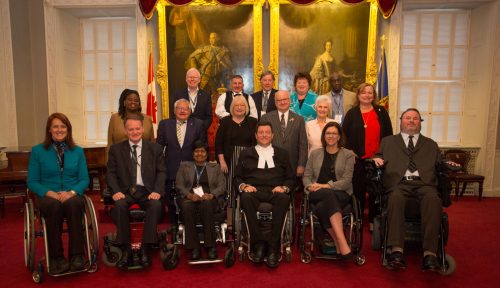
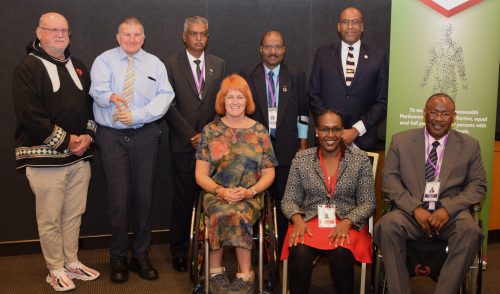
CPR: What was the campaign to bring the CPwD to CPA International like? How did you go about it?
KM: The CPA Executive Committee is made up of a representative from each of the seven regions, plus a representative from the women’s side, and the past chair. I tried to garner the support of each one of those people. But I didn’t get it. It wasn’t a unanimous vote.
There were still some frustrating concerns from people who simply just didn’t get it. That wasn’t totally unexpected. But, in a democracy you just need enough votes to win. So, in order to get the support of an executive member, I reached out to people like me in those regions and asked them to speak to their representative, to educate them about the need for this group, and subsequently try to win their support for it.
You know, a very wise, tall man who became our premier once told me that when it comes to elected politics, you can’t change the world unless you’re nominated. You must win the nomination first. You win the nomination by getting the most votes. So, focus on getting the most votes. Make sure you get your voters out so that you win the nomination and then win the election. Then, only then, can you really work on the things you want to on behalf of the people you are representing. That playbook served me well in getting that initiative up and running.
At the end of the day, I’m thrilled that it’s there and enshrined in the CPA’s operations. I’m still trying to find a way, and admittedly I’ve planted seeds, to stay more involved, and I will always have my voice, and stay involved.
CPR: What have you been up to since leaving parliamentary politics?
KM: I had the good fortune to join the federal government. It was quite timely. I took some time, obviously to rest and regroup and try to figure out what I wanted to be when I grew up and wasn’t too long. Minister Qualtrough gave me a call to see what I had on the go. She was telling me about the initiative for the Canada Disability benefit federally and that she was putting a team together to advance that piece of legislation. When she was minister, I worked closely under her leadership to help shepherd the disability benefit bill through both houses and then, of course, rolled my sleeves up and got to work with our policy team to build the program.
In the blink of an eye, four years passed, and the program is up and running. The allocation from last year’s budget was $6.2 billion over 4 years. I truly believe this will change the lives of Canadians with disabilities. This represents real progress, but there is so much more work and advocacy that still needs to happen.
There was tons of learning for me along the way as I shifted from the person in the front of cameras and microphones to a policy advisor behind the scenes. Being on the other side of the desk was really enlightening. The learning curve for me was incredibly steep. Going from the cozy little world of Nova Scotia politics where I knew everyone by first name to the much larger and deeper world of Ottawa where millions of dollars is loose change under the seat cushions. The layers of bureaucracy and processes are much deeper.
I had an opportunity to go full circle as I approach retirement by joining the Praxis Spinal Cord Institute team to ensure the voices of people with experience continue to be heard and included in their work and beyond, coast to coast. So, I find myself back at the beginning of the learning curve in many ways.
CPR: Thank you so much for sharing your thoughts on this.
—
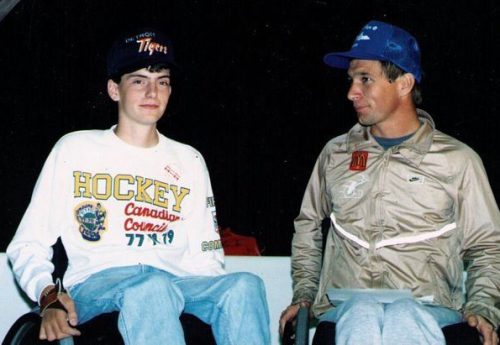
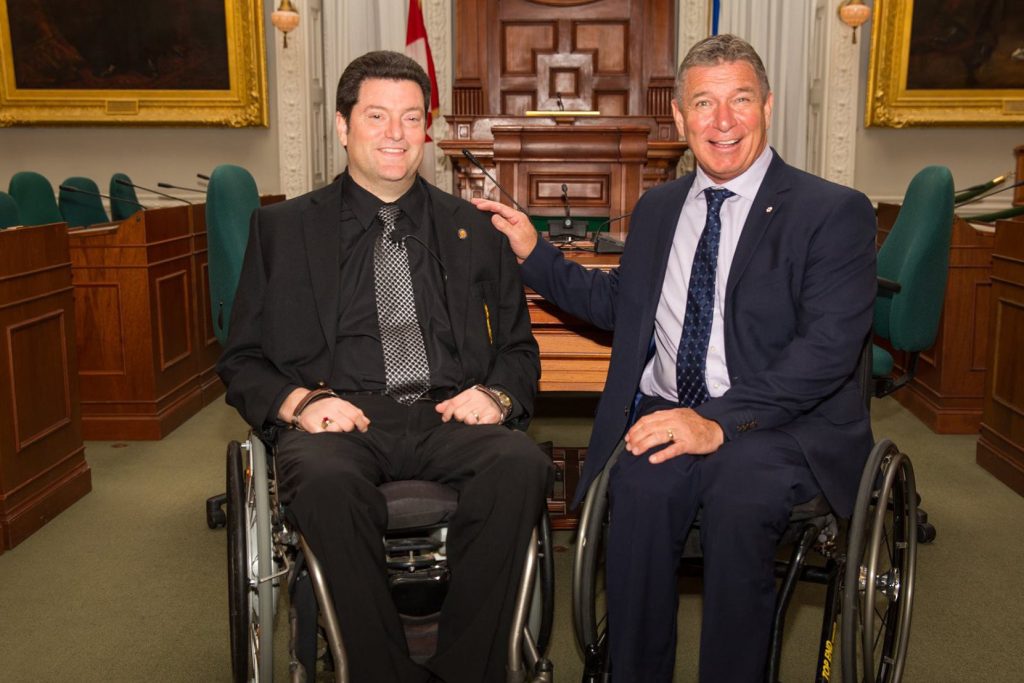
Murphy’s friendship with Canada’s Man-in-Motion Rick Hansen began after his debilitating injury as a teenager and continued through his time in the Assembly and beyond.
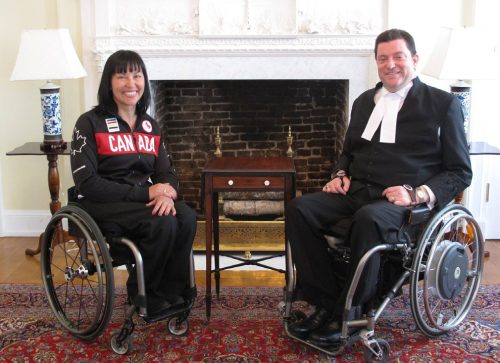
Murphy greets future Senator Chantal Petiticlerc at the Nova Scotia Assembly in her role as Chef de Mission for Canada’s 2016
Paralympic team.